 Although the Emancipation Proclamation was short, it was to the point and very significant. On January 1st 186, this document declared any slave in a rebellion state, would be free. Lincoln recognized the slave states as, Arkansas, Texas, Parts of Louisiana, Mississippi, Alabama, Florida, Georgia, North and South Carolina and Parts of Virginia. Lincoln stressed that the freed slaves were all to be excepted into the Country as citizens, and the Citizens and government were asked to recognize them as so. Lincoln also adds that all free slaves will be excepted into the US Army to do various jobs. Hopeful Abraham Lincoln was hoping this document to make the Civil War simmer down and create a united country again.
Monday, November 26, 2012
LAD #20 Emancipation Proclamation
Although the Emancipation Proclamation was short, it was to the point and very significant. On January 1st 186, this document declared any slave in a rebellion state, would be free. Lincoln recognized the slave states as, Arkansas, Texas, Parts of Louisiana, Mississippi, Alabama, Florida, Georgia, North and South Carolina and Parts of Virginia. Lincoln stressed that the freed slaves were all to be excepted into the Country as citizens, and the Citizens and government were asked to recognize them as so. Lincoln also adds that all free slaves will be excepted into the US Army to do various jobs. Hopeful Abraham Lincoln was hoping this document to make the Civil War simmer down and create a united country again.

LAD #19 Lincoln's 2nd inaugural address

Saturday, November 17, 2012
LAD #18/ Dred Scott vs. Sanford

Friday, November 16, 2012
Blog #17/ Sojourner Truth "Aint I A Woman?"
"Ain't I A Woman?"
 In 1851, Sojourner Truth, a black woman, performed a very moving speech about rights for not just white woman, but black woman as well. She calls out two major issues, racist and sexists. She questions why woman are constantly being seen as helpless and weak, when really, woman can do anything. She also doesn't understand why white woman are treated so much better than black woman, but "Ain't (she) a woman?" While she is a woman of the south, she doesn't quite understand why the woman of the north are treated very nicely and with respect. Although they both have few rights, "Ain't (they both) a Woman?" She also questions why woman are seen as dumb or, less smart than men, but she really doesn't care about that, because she would rather have respect. Truth ends her argument, with men would be nothing without woman; they wouldn't be here without a woman.
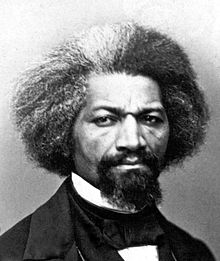
Blog #16/ Frederick Douglas "5th of July"
"5th of July" Speech
Tuesday, November 13, 2012
LAD #15 Gettysburg Address
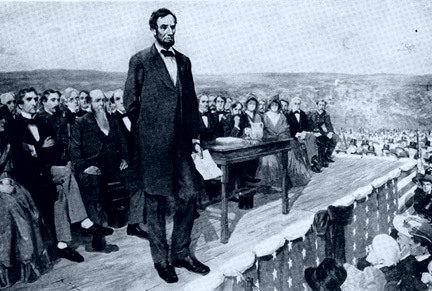
After defeating the Confederate Army at Gettysburg, President Lincoln, gives his famous speech about honoring the Soldiers who have fought for the preservation of our country. Lincoln thanks all of the Soldiers that have fought for the Union to establish the peace and prosperity the country needs. He also encourages the people to continue fighting, so that the men who died, died for the preservation of the union that was created about 90 years before. Lincoln concluded by saying "nation under God shall have a new birth of freedom", and reassured the crowd that after fighting, the nation will come back stronger and more united than ever.
LAD #14 Lincoln's First Inaugural Address
 In 1861, at the brink of the Civil War, Abraham Lincoln made his inaugural speech. He made it clear to the Southern states that he did not intend on outlawing slavery in any area it had already existed. For other fearful southerners, he said he was sure to protect all states rights and recreate the bond of the united nation. To protect states rights and gain support from other southerners, he said he would keep the fugitive slave act; this would ensure any slave that ran away into another state would be forced to return to its owner.
Other than, gaining loyalty from the south, Lincoln's main message and hope was to create a united union again. Because of the age of the Union, Lincoln felt it was necessary to persevere through this hard time. He told the states that threatened succession, that their act was unconstitutional. And although never mentioned in the Constitution, he felt that the civil war, and the threat of succession would ruin American's prosperity. Lastly, Lincoln said that all American's are friends and family and he would do anything he could to keep that family bond.
Subscribe to:
Posts (Atom)